Stress Risk Assessment Template & Action Plan Builder
Workplace stress
risk assessment.
A clearer plan.
Build your assessment around the six HSE areas. Turn conversations into actions, owners and a date to check what has changed for your team.
Free to use · No sign-up · Editable Word and PDF options
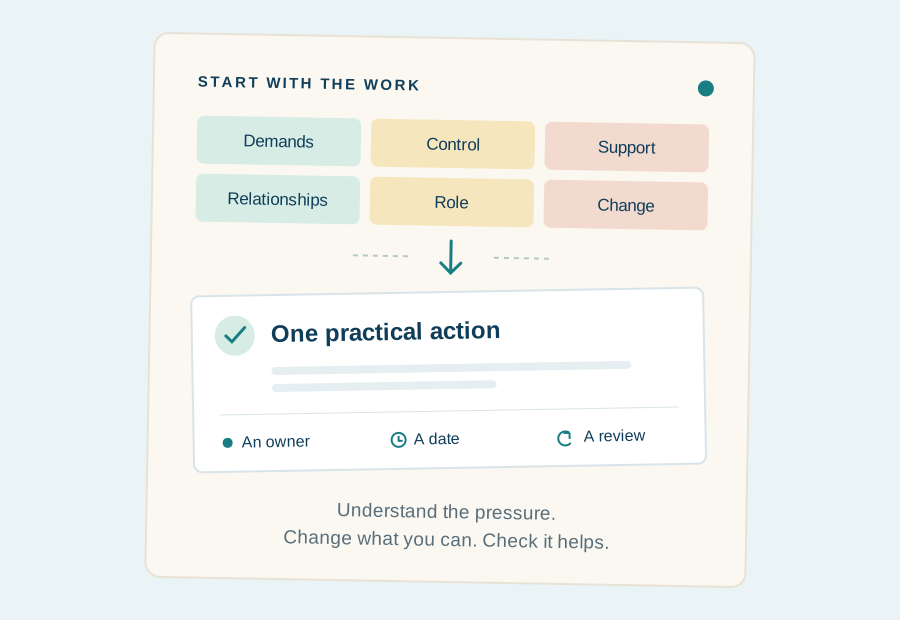
Understand the pressure.
Change what you can. Check it helps.
What is a stress
risk assessment?
A workplace stress risk assessment looks at aspects of work that could cause harm, who might be affected, and what needs to change. It helps you decide whether existing measures are enough and record the actions you will take.
Use this builder with the people doing the work and their representatives. It gives you a structure for the assessment and its action plan; the quality of the assessment depends on that discussion, your judgement and follow-through.
Based on HSE guidance for Great Britain. Northern Ireland has separate legislation and HSENI guidance. Sources and scope notes are at the end.
Understand the work
Agree the scope and hear from the team.
Decide what needs to change
Consider the risk and record practical actions.
Review what happens
Check progress and whether the actions help.
Look at the work
from every angle.
The HSE Management Standards cover six areas of work design. Use them as conversation prompts, rather than a checklist that gives a pass or fail.
Demands
Workload, work patterns and the working environment.
Control
How much say people have in the way they do their work.
Support
Resources, encouragement and support from the organisation, managers and colleagues.
Relationships
Positive working relationships, conflict and unacceptable behaviour.
Role
Understanding responsibilities and avoiding conflicting roles.
Change
How organisational change is managed and communicated.
Your assessment.
Your next actions.
Your entries stay in this page. Save a copy before leaving or reloading. Use team-level notes; leave out names of affected individuals, diagnoses and confidential health details.
Agree what you are assessing.
Keep the scope specific enough to discuss with the people involved. You can return to any field later.
Team discussions, staff feedback, absence patterns and existing assessments can help you understand the pressures. Consider different roles, shifts and working arrangements, including people who may be more vulnerable to harm.
Explore each area. Record what matters.
You do not need an action for every area. Record the discussion and your reasoning, including when existing measures appear sufficient.
Demands
Risks and actions
No risk or action recorded for this area yet. Add one when your discussion identifies something to address.
Give the plan a final read.
Check that actions address the work itself, have an owner and a realistic date. Agree the plan with those responsible, share it with workers, and decide how you will tell whether it has helped.
Save an editable copy
Download a Word plan to edit or share. Save a plan file if you want to load these answers back into this builder.
Print or save as PDF
Review the complete assessment below, then choose your browser’s “Save as PDF” option or a printer.
Downloaded files may contain sensitive workplace information. Store and share them using your organisation’s arrangements.
0 of 6 areas marked as discussed · 0 actions
This independent resource supports a workplace assessment. It does not certify legal compliance, diagnose stress or replace consultation, competent advice or action on identified risks.
Review your plan.
From “too much work”
to something you can change.
A customer-support team reports that urgent tasks repeatedly interrupt planned work. The assessment should explore how work is allocated and managed.
- THE PRESSURE
Two managers assign competing urgent tasks without agreeing priorities.
- THE ACTION
Agree one daily priority list and a route for deciding which new requests can wait.
- THE FOLLOW-THROUGH
The team lead owns the change. Review it with the team after two weeks and record whether interruptions have reduced.
Take the conversation
away from the screen.
Use the free templates in a team discussion or planning meeting. Both include the six areas, space for actions and a review.
Blank templates · No sign-up required
A conversation.
A practical plan.
A few useful answers.
Is a stress risk assessment required?
HSE says employers have a legal duty to protect workers from stress at work by doing a risk assessment and acting on it. In Great Britain, employers with five or more employees must record the significant findings. A written record can also help smaller organisations. Completing this template alone does not demonstrate that the risks have been managed.
Is this an individual stress assessment?
The builder is designed for a team, work activity or workplace. Individual circumstances may also need a confidential discussion and appropriate support or adjustments. Keep personal health information out of this shared team-level plan and follow your organisation’s arrangements.
Do we need a numerical risk score?
This tool does not calculate a score. Record your judgement about how likely harm is, how serious it could be and whether current controls are sufficient. Choose priorities in the context of your work, and follow your organisation’s risk-assessment method if it requires one.
How often should we review the assessment?
Set a review date that fits the risks and the actions you have agreed. Check that actions happen and whether they work. Review sooner if controls may no longer be effective, work changes, or workers identify a problem. A completed action is not the same as evidence that a risk has reduced.
Will my answers be saved automatically?
No. Answers are held in this page while it is open; they are not sent to us or stored in the browser by this tool. Use “Save plan file” to continue in the builder later, or download the Word plan. Leaving or reloading clears the current answers. Your downloaded files are yours to store and protect.
Is this an official HSE template?
No. It is an independently created resource organised around HSE’s six Management Standards areas. It is not approved or endorsed by HSE. Follow the official guidance alongside your organisation’s arrangements and seek suitable advice when needed.
Explore our mental health
first aid training.
The guidance behind the tool.
Checked 17 October 2026. HSE guidance applies to Great Britain; Northern Ireland has a separate legal framework. This resource uses the same six work-design areas and directs Northern Ireland employers to HSENI.
- HSE — Work-related stress and how to manage it: risk assessmentEmployer duties, assessment and action.
- HSE — Management Standards overviewThe six areas of work design used in this resource.
- HSE — Managing risks and risk assessment at workIdentifying hazards, evaluating risks, recording findings and reviewing controls.
- HSE — Consult your workersInvolving workers and their representatives.
- HSE — Develop and implement an action planAgreeing actions, responsibilities and resources.
- HSE — Monitor and reviewChecking that agreed actions happen and are effective.
- HSENI — Work-related stress: advice for small businessesNorthern Ireland guidance and the six Management Standards areas.
New risk and actionPlanned
Priority is your judgement; this tool does not calculate risk.