Stress Bucket: Interactive Tool & Free Worksheet
What’s filling your stress bucket?
Put everyday pressures into words. Notice your early warning signs. Find a small next step that could help.
A reflection exercise, not a stress test. Take it at your pace.
What is a stress bucket?
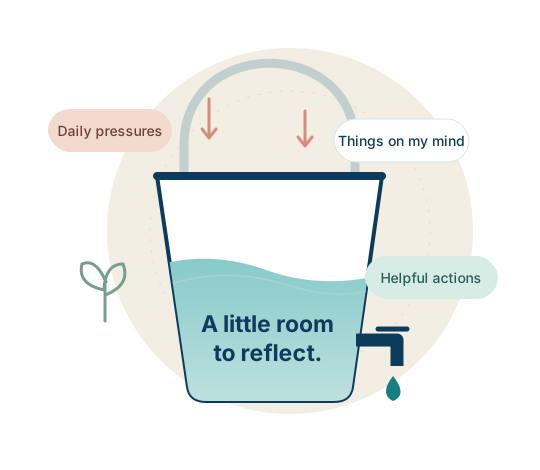
A stress bucket is a visual way to think about the pressures in your life and the things that help you manage them. Imagine those pressures collecting in a bucket, with helpful actions and support acting like taps that let some pressure out.
Use it to notice what is adding pressure, recognise your early warning signs and choose one practical next step. Your bucket is personal: two people can experience the same situation differently, and the number of entries is not a stress score.
Name the pressures
What is taking up space?
Notice your signs
How does it show up for you?
Choose what could help
One action is a place to start.
A picture of your pressures.
A plan for your next step.
Your answers stay on this page and are not sent to us. Save them before you leave—refreshing or closing the page clears them.
What is adding pressure?
Think about work, home, relationships or anything taking up space in your mind. Short phrases are enough.
Up to 6 entries. You can skip any step.
What do you notice?
Think about changes you recognise in yourself when pressure builds. These can be cues to pause, make a change or seek support.
Up to 6 entries. These are your observations, not a diagnosis.
What could help?
Include things that give you a break and things that address the pressure itself. Support from other people can be part of the plan.
Up to 6 entries. One useful action is a good start.
Choose one small next step
If work is part of the pressure, include changes to the work itself. A personal worksheet can help start a conversation; it does not replace an employer’s approach to managing work-related stress.
Your worksheet
You choose what to keep and what to share.
My stress bucket
My pressures, my signs and what could help.
What is filling my bucket?
What do I notice?
What could let some pressure out?
One small next step
When
Who could help
A reflection exercise, not a stress score. Stress-bucket model: Brabban & Turkington (2002), as credited by Rethink Mental Illness in its NHS-hosted worksheet. Original resource: mentalhealthfirstaidcourse.co.uk.
Choose “Save as PDF” in your device’s print options for a PDF copy. Downloaded or printed answers stay in your chosen location.
A stress bucket example
Fictional example · When work is piling up
Here is how one person might use the exercise. Your pressures, signs and helpful actions may be different.
- 01 · Pressure
“Several urgent tasks are arriving at once.”
- 02 · Signs I notice
“I keep rereading things and find it hard to switch off.”
- 03 · What could help
“Agree priorities and realistic deadlines with my manager.”
- 04 · My next step
“Ask which two tasks should come first at tomorrow’s check-in.”
Prefer to write it down?
Download the one-page stress bucket worksheet. Print a blank copy or type into the PDF, with space for pressures, warning signs, helpful actions and a next step.
Download the worksheet ↓FREE PDF · A4 LANDSCAPE · FILLABLE & PRINTABLE
Make the exercise
work for you.
Does this tell me how stressed I am?
No. It is a way to reflect, not a validated questionnaire or diagnosis. The picture and the number of entries are not a stress score. Use the exercise to put your experience into words and identify something you want to do next.
Can I use it with a colleague or a group?
Yes, as an optional conversation activity. Let people decide what to write and whether to share anything. A fictional example can help a group get started. At work, focus on practical changes and support rather than asking people to disclose personal details.
What if I am struggling to cope?
You can stop the exercise whenever you want. If you are struggling to cope with stress, or things you have tried are not helping, speak with a GP or another health professional. A worksheet can help you explain what has been happening, but it is not a substitute for getting support.
Will my answers be saved?
Your entries are held only on this page and are not sent to us. Refreshing, closing or leaving the page clears them. Use the worksheet print options or download your notes to keep a copy. Anyone with access to your saved file or printout may be able to read it.
Sources & the idea behind the bucket
This original worksheet uses the stress-bucket metaphor. Rethink Mental Illness’s worksheet, hosted by NHS Professionals, credits an idea by Brabban and Turkington (2002). The questions and illustrations here are our own.
- Rethink Mental Illness — The Stress Bucket, hosted by NHS Professionals (PDF)The metaphor, reflection prompts and model attribution.
- NHS — StressRecognising stress, practical steps and seeking support.
- Health and Safety Executive — Stress Talking ToolkitsConversations about work-related causes and practical changes.
Prepared 17 October 2026